Showing posts with label Greatest protest. Show all posts
Showing posts with label Greatest protest. Show all posts
Tuesday, April 26, 2016

Maldives has always been a brave country. Though we are small in size but our courage is bigger than our hearts. Alas! Even then we were ruled by our own people consecutively for 30 years. At present too we are being ruled by a dictator and it is high time to fight against him!
I still have a yellow flag clubbed with our national flag kept in my room. Whenever I look at it, a feeling of enthusiasm emerges inside me and reminds me of 1 May 2015. I go back in time and find myself on the streets of Male, raising my voice to Free Anni and Save Maldives! Even being a girl didn't stop me from stepping out and shout in the protest. We all were hopeful. Sheikh Imran's speech filled me with hope and spirit. The country then marched together as one for just one thing, “Free President Nasheed” Yes, the dictator got scared and ordered his puppets to crackdown the march but our resolution is still intact.
On 1st May 2016, it will be an year since #EkehFaheh15 and after knowing about so many corruptions including his black magic tricks, I think there should be another large Protest. Bigger than EkehFaheh 15 .
This time we all know the tyranny's tactics and we are more stronger. Everyone has seen how pres. Yameen is shallowing Maldives. How he is just collecting money in his coffers and is letting everyone die while paying rent. We all have to unite for stopping this man and his family from bankrupting all of us. We all have to stand together to save our future !! Another MayDay protest or a bigger one then that has to be done.
We have to show Yameen that Maldives is still brave enough to fight and win its democracy back!!
Tuesday, June 23, 2015
1. The Occupy Movement (2011-present)

A world-wide demonstration against the so called 1% and global social and economic inequality, the Occupy movement is an international protest movement aiming to make the economical and political relations in all societies less vertically hierarchical and more flatly distributed. Different groups all over the world have different foci on the protests, but among them it’s primary concerns being about the belief about large corporations and global financial system controlling the world in a way that kept the poor poorer and the rich richer with every passing moment. The protest started with slogans like, ‘’We are the 99%,’’ and what started as a protest against the Western economic distributions grew up to be a world- wide revolution against the minutely controlled economic system of the world that is believed to be favoring the top 1% and leaving the rest 99% to suffer compromise.
FINAL CONCLUSION: Most of the protests we have seen in the list are not from long ago or from the worn pages history books. They happened right in front of our eyes as we carried on with our normal lives. The normalcy of our day-to-day commute may have kept us ignorant about the wind that is changing tides around the world. A significantly common attribute among all the protests we have discussed seems to be ‘’social media and networking’’. Yes, the social networking advancement in the world has certainly helped the protesters all over the world to keep in touch with each and everything that happens around them and support each other in the objective of achieving the same unified goal of a bigger, better and a brighter future in all aspects of our lives for all of human-kind.
2. Brazilian Protests (2013)

Mainly initiated by the Movemento Pasee Livre (Free Fare Movement), a local organization advocating for free public transportation, 2013 protests in Brazil are a series of on-going public demonstrations in several Brazilian cities. Also known as the V for Vinegar Movement or Salad Revolt, the Brazilian Spring demonstrations were started to protest against the increases in bus, train and metro ticket prices in many Brazilian cities, but however it grew to include other issues such as police brutality and by mid June, 2013 it had been the largest movement Brazil had seen since the 1992 protests against then-President Fernando Collor de Mello
3. Turkish Protests (2013)

A series of protests and demonstrations against the freedom of the press, freedom of expression, freedom of assembly, and the government’s encroachment on Turkey’s secularism that started on May, 2013, initially sparked to detest the urban development plan for Istanbul’s Taksim Gezi Park. The protests were ignited by brutal outrage due to the eviction of a sit-in at the park protesting the plan. The protests with no centralized leadership and with only small groups organizing environmental protests across the country; the movement has been compared to the Arab Spring, the Occupy movement and the Revolutions of 1989 and May 1968 by many key observers. However, on 6th June, PM Erdoğan seemingly not buzzed even due to all the protests said that the developments plans would go ahead despite the protests and he also announced he will not be sorry for the excessive police violence on the protesters after the announcement. According to the Turkish media, rather than violent and forceful means, humor and internet technology has been the primary weapon for the protesters.
4. Arab Spring (2010-present)

The Arab Spring is a list of on-going protests and all kinds of revolts both violent, non-violent riots, civil wars taking place all over the Arab World against their respective governments and existing economic, political, social and educational systems. As of yet, respective rulers from Tunisia, Egypt (twice), Libya and Yemen have been forced from power. Civil uprisings and major protests have shaken the governments in countries like Bahrain, Syria, Algeria, Iraq, Jordan, Kuwait, Morocco and Sudan. Countries like Mauritania, Oman and Saudi Arabia are catching up with the revolutionary wave of protests and demonstrations. Many observers have compared the Arab Spring movements with the Revolution of 1989, also known as the ‘Autumn of Nations’ that swept through the Eastern Europe and the Second World, in terms of scale and their significance.


It’s surprising to see the number of
protests in history that were initiated with peaceful propositions at
the start and turned pretty violent as they headed close to their ends.
Often times, peaceful protesters get rowdy and start havoc because of
being treated unjustly by police and other opposing forces. Sometimes
protests are even opposed with simply more protests carried out by
opposition groups, parties and political groups in the most recent
cases. Protests are basically people’s way of demonstrating against
something/ someone that isn’t up to their expectations or up to the
potential of what reality should have been like for particular issues.
Protesters demand change, and immediate change for that matter and
perhaps that is the very reason they do not hesitate to cross any extent
that reality has to offer in order to get their expectations
compromised, if not met completely.
1. Cherokee Indian Resistance to Forced Relocation (1838)

Objective: Avoid having their land seized by the United States government
Method of Protest: Cherokees stood their ground, and made no preparations to move.
Results: U.S. troops destroyed the homes and property of the resisting Cherokees, forcing them to move west on a journey that would leave approximately 4,000 dead from disease and starvation.
Was the Protest a Success?
No. The path the Cherokees took from their homes is still knows as the Trail of Tears.
2. Gandhi’s Salt March (1930)

Objective: Independence of Colonial India from British Authority
Method of Protest: To avoid paying the British tax on salt, Gandhi decided to get his own salt. To do this, he walked 240 miles over the course of 24 days, joined by a growing number of followers.
Results: Gandhi was jailed, but the protest drew national attention to his cause and he was eventually released.
Was the Protest a Success?
Not immediately, but it is considered a watershed moment for India’s struggle for independence, which was finally obtained two decades later.
3. The White Rose Resistance (1942–1943)

Objective: Undermine the Nazi Rule of Germany
Method of Protest: Distributing leaflets that philosophically challenged the ideas of the Nazis.
Results: The six main members of the group were arrested and beheaded.
Was the Protest a Success?
No
4. The Montgomery Bus Boycott (1955–1956)

Objective: Lessen racial segregation and inequality for blacks in the American South
Method of Protest: Montgomery’s black population refused to use public transportation.
Results: An Alabama district court ruled that the racial segregation was unlawful. The decision was appealed but upheld by the Supreme Court.
Was the Protest a Success?
Yes. It also served as the impetus for the civil rights movement of the 1960s.
5. Pureora (1978)

Objective: Stop deforestation of the Pureora forest in New Zealand
Method of Protest: Built tree houses, refused to leave them
Results: The Government agreed to permanently stop logging operations and the area became a park.
Was the Protest a Success?
Yes. It has also inspired many other tree-sitting protests, with varying levels of success.
6. Tiananmen Square Protests (1989)
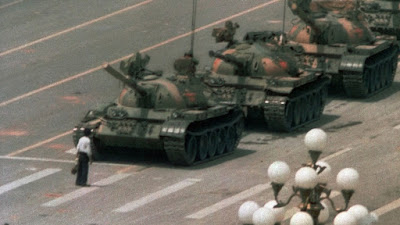
Objective: Political reform and free media in the authoritarian Chinese government
Method of Protest: Seven weeks of peaceful marches and demonstrations
Results: The People's Liberation Army of China opened fire on the protesters. The exact death toll of the massacre is still unknown; estimates range from 200 and 10,000.
Was the Protest a Success?
No. The current Chinese government does not acknowledge the killings. All online information about the massacre is censored in China.
6. The Lust Lady Strike of San Francisco (1997)

Objective: Ability for strippers at San Francisco’s Lusty Lady club to form a union
Method of Protest: Strippers went on strike protesting outside the club and asking patrons not to enter unless the women were allowed to form a union.
Results: After a lengthy legal battle, the dancers were permitted to form a union
Was the Protest a Success?
Yes
7. The Singing Revolution (1986-1991)

Objective: Independence from the former Soviet Union for Estonia, Latvia and Lithuania
Method of Protest: Protesters gathered in the streets where they sang songs of national pride, which had been outlawed by the Soviet occupiers.
Results: After four years of demonstrations, many involving song, and the deaths of 14 protesters in Lithuania, all three countries gained sovereignty.
Was the Protest a Success?
Yes
8. Demonstration against Invading Iraq (2003)

Objective: Stop the United States from invading Iraq
Method of Protest: An estimated 6 to 10 million people around the world publicly protested the impending war.
Results: The invasion of Iraq happened anyway.
Was the Protest a Success?
No. They still have troops in Iraq to this day.
9. The “Lactivists” at Applebee’s (2007)

Objective: Stop discrimination against public breastfeeding at Applebee’s Restaurants
Method of Protest: A “Nurse-in” was scheduled — across the country, breastfeeding mothers would nurse their infants in plain view of Applebee’s.
Results: Applebee’s put out a statement saying “This situation has provided an opportunity for us to work with our associates to ensure we’re making nursing mothers feel welcome….we will also accommodate other guests who would be more comfortable moving to another area of the restaurant.”
1. Cherokee Indian Resistance to Forced Relocation (1838)


Objective: Avoid having their land seized by the United States government
Method of Protest: Cherokees stood their ground, and made no preparations to move.
Results: U.S. troops destroyed the homes and property of the resisting Cherokees, forcing them to move west on a journey that would leave approximately 4,000 dead from disease and starvation.
Was the Protest a Success?
No. The path the Cherokees took from their homes is still knows as the Trail of Tears.
2. Gandhi’s Salt March (1930)

Objective: Independence of Colonial India from British Authority
Method of Protest: To avoid paying the British tax on salt, Gandhi decided to get his own salt. To do this, he walked 240 miles over the course of 24 days, joined by a growing number of followers.
Results: Gandhi was jailed, but the protest drew national attention to his cause and he was eventually released.
Was the Protest a Success?
Not immediately, but it is considered a watershed moment for India’s struggle for independence, which was finally obtained two decades later.
3. The White Rose Resistance (1942–1943)

Objective: Undermine the Nazi Rule of Germany
Method of Protest: Distributing leaflets that philosophically challenged the ideas of the Nazis.
Results: The six main members of the group were arrested and beheaded.
Was the Protest a Success?
No
4. The Montgomery Bus Boycott (1955–1956)

Objective: Lessen racial segregation and inequality for blacks in the American South
Method of Protest: Montgomery’s black population refused to use public transportation.
Results: An Alabama district court ruled that the racial segregation was unlawful. The decision was appealed but upheld by the Supreme Court.
Was the Protest a Success?
Yes. It also served as the impetus for the civil rights movement of the 1960s.
5. Pureora (1978)

Objective: Stop deforestation of the Pureora forest in New Zealand
Method of Protest: Built tree houses, refused to leave them
Results: The Government agreed to permanently stop logging operations and the area became a park.
Was the Protest a Success?
Yes. It has also inspired many other tree-sitting protests, with varying levels of success.
6. Tiananmen Square Protests (1989)

Objective: Political reform and free media in the authoritarian Chinese government
Method of Protest: Seven weeks of peaceful marches and demonstrations
Results: The People's Liberation Army of China opened fire on the protesters. The exact death toll of the massacre is still unknown; estimates range from 200 and 10,000.
Was the Protest a Success?
No. The current Chinese government does not acknowledge the killings. All online information about the massacre is censored in China.
6. The Lust Lady Strike of San Francisco (1997)

Objective: Ability for strippers at San Francisco’s Lusty Lady club to form a union
Method of Protest: Strippers went on strike protesting outside the club and asking patrons not to enter unless the women were allowed to form a union.
Results: After a lengthy legal battle, the dancers were permitted to form a union
Was the Protest a Success?
Yes
7. The Singing Revolution (1986-1991)

Objective: Independence from the former Soviet Union for Estonia, Latvia and Lithuania
Method of Protest: Protesters gathered in the streets where they sang songs of national pride, which had been outlawed by the Soviet occupiers.
Results: After four years of demonstrations, many involving song, and the deaths of 14 protesters in Lithuania, all three countries gained sovereignty.
Was the Protest a Success?
Yes
8. Demonstration against Invading Iraq (2003)

Objective: Stop the United States from invading Iraq
Method of Protest: An estimated 6 to 10 million people around the world publicly protested the impending war.
Results: The invasion of Iraq happened anyway.
Was the Protest a Success?
No. They still have troops in Iraq to this day.
9. The “Lactivists” at Applebee’s (2007)

Objective: Stop discrimination against public breastfeeding at Applebee’s Restaurants
Method of Protest: A “Nurse-in” was scheduled — across the country, breastfeeding mothers would nurse their infants in plain view of Applebee’s.
Results: Applebee’s put out a statement saying “This situation has provided an opportunity for us to work with our associates to ensure we’re making nursing mothers feel welcome….we will also accommodate other guests who would be more comfortable moving to another area of the restaurant.”
Subscribe to:
Posts (Atom)
Popular Posts
-
 Appointed as Ambassador of Maldives to Japan Former Presidential Affairs Minister Mohamed Hussain ‘Mundhu’ Shareef has been appoin...
 -
 There is a rumour going viral on social media that Maldivian Army top brass has expressed reservations about being drawn ...
 -
Abdulla Ameen, one of the most important minister from Yameen Government has won " transparency international honor of Politi...
-
 Bed-In for Peace Beatles legend John Lennon married his second wife Yoko Ono on March 20, 1969. Five days later, in lieu of a traditiona...
 -
1. The Occupy Movement (2011-present) A world-wide demonstration against the so called 1% and global social and economic ine...
-
 Ministry of Defence and National Security in Maldives has signed an agreement with India’s Lovely Professional University for co...
 -
 The Anti-Corruption Commission (ACC) has stated that investigations have revealed that Abu Dhabi’s association had made the donation ...
 -
 He remains a figurehead for the promotion of human rights and democracy in Islamic countries, and an international icon for ac...
 -
 Rumors in the power corridors are that Adheeb also conspiring to replace the Vice President. The theory is that VP is only amongst ...
 -
 Yameen, the great ruler, President of Maldives is ready for his crowning ceremony. This is happening first time in the history of t...